
Introduction: Remembering a Digital Pioneer
Orkut, launched by Google in 2004, was one of the pioneering social media platforms that illustrated the potential of online communities. It gained immense popularity particularly in Brazil and India, becoming the main digital hub for millions of users in those regions. Although Orkut was officially shut down in 2014, its legacy lives on, influencing the design, culture, and marketing approaches of today’s social networks. Revisiting Orkut today offers a fascinating look at how early digital communities shaped the way we connect, communicate, and build relationships online.
Orkut’s Identity: A Platform Built on Community and Belonging
Orkut stood out by prioritizing genuine connection over algorithm-driven content. Instead of endless feeds, it focused on personal interactions—users exchanged “scraps,” shared heartfelt testimonials, and participated in thousands of interest-based communities spanning topics like music, movies, relationships, and local culture. These communities formed the core of Orkut, fostering a sense of belonging that felt authentic and personal. Rather than broadcasting to a broad audience, Orkut emphasized finding and connecting with like-minded people. This strong community identity laid the groundwork for features now common on platforms such as Facebook Groups, Reddit forums, and Discord servers.
The Culture of Authenticity: A Different Kind of Social Interaction
Orkut’s culture of sincerity was one of its most memorable qualities. Profiles were vibrant and expressive, testimonials deeply personal, and interactions carried an intimacy often missing in today’s curated and polished content. Users weren’t focused on chasing likes or followers but on building genuine relationships. This authentic approach is something modern platforms are striving to reclaim as audiences seek real voices and relatable content. In many respects, Orkut was ahead of its time, demonstrating that meaningful engagement stems from honest expression rather than performance.
Orkut as an Early Model for Social Listening
Although Orkut preceded the era of advanced analytics tools, it naturally fostered what we now call social listening. Brands could observe organic conversations within communities, gaining direct insights into user interests, frustrations, and emerging trends. These discussions functioned like real-time focus groups, revealing what truly mattered to people without the influence of filters or algorithms. While modern companies invest heavily in sophisticated social listening platforms, Orkut offered a raw, unfiltered glimpse into user-generated conversations long before such strategies became formalized. It highlighted the power of these authentic interactions to inform and shape brand decisions.
Innovation and Decline: Why Orkut Didn’t Survive
Despite its early success, Orkut struggled to keep pace with rapidly evolving user expectations. Competitors like Facebook offered cleaner interfaces, stronger privacy controls, and superior mobile functionality just as mobile usage was booming. Orkut’s updates lagged behind, and its design started to feel outdated. As users gradually migrated to newer platforms, Orkut’s influence waned. Its decline serves as a reminder that digital platforms must continuously innovate to stay relevant. In the fast-moving world of social media, even well-loved platforms can vanish if they fail to adapt.
Orkut’s Lasting Legacy in Today’s Social Media World
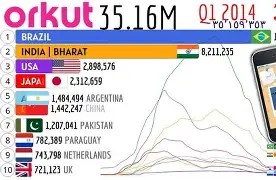
Although Orkut is gone, its impact is still visible across the digital landscape. Features like profile customization, interest‑based groups, and user testimonials were either pioneered or popularized by Orkut. The platform also demonstrated the global nature of social media long before it became mainstream. Its massive popularity in Brazil and India showed that online communities transcend geographic boundaries, a lesson that continues to shape global marketing strategies today. Orkut’s legacy reminds us that the foundations of social media were built on connection, community, and authenticity values that remain essential even in an era dominated by algorithms and viral content.
Conclusion: Why Orkut Still Matters
Looking back at Orkut reveals just how influential this early platform was in shaping the digital world we know today. It taught us that people crave community, that authenticity builds trust, and that innovation is essential for survival. Even though Orkut no longer exists, its spirit lives on in the platforms we use every day. Revisiting its story reminds us that the earliest digital communities still have something to teach us about connection, culture, and the future of online interaction.








 Marketing Through My Lens